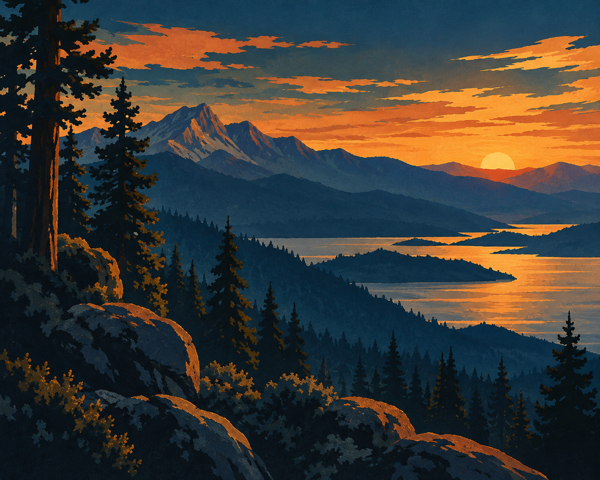

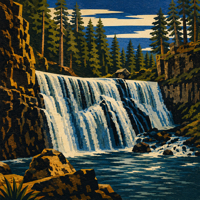
 About five miles east of the town of McCloud, a side road turns off Highway 89 at the sign for Fowler’s Campground. Over the next mile and a half, that road passes all three falls – Lower, Middle, and Upper – each with its own parking lot a short walk to the water.
This is the McCloud River, cutting through the Shasta-Trinity National Forest on its way down from Mount Shasta’s southern flank. Lower, Middle, and Upper Falls sit close enough together that you can walk the whole stretch on one trail or drive to each one separately – from parking lot to parking lot.
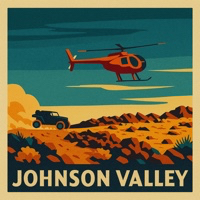 The Johnson Valley community has been holding its breath these past months as the U.S. Marine Corps’ Special Use Airspace proposal, R2509, moves through the public process. After an intense wave of local comments and outreach, momentum slowed during the government shutdown — but the Marines have since released public fact sheets about the proposal. That put new material in front of the public, and it’s precisely the sort of moment when clear information matters most.
 Ferndale is a small, storybook town on the edge of California’s Lost Coast that feels like stepping back into the Victorian age. Tucked into a broad coastal plain in Humboldt County, the town is famous for its brightly painted Victorian “Painted Ladies,” ornate storefronts, and a deep dairy heritage that once earned it the nickname “Cream City.” A stroll down Main Street—now part of a nationally recognized historic district—reveals the same gingerbread trims and turrets that brought movie crews and curious roadtrippers to town. 
 Truckee feels like a town that learned to keep its winter boots close to a warm hearth. Born as Gray’s Station in 1863, around Joseph Gray’s roadhouse, then briefly known as Coburn’s Station for blacksmith Samuel Coburn, the place settled on the name Truckee when the Central Pacific christened its depot in 1867. The name itself was lifted from a Paiute chief—Tru-ki-zo—whose shouted “Tro-kay!” (“Everything is all right”) was misheard as a name by early travelers.
  Auburn sits where the western flank of the Sierra begins to steepen into real country — a Gold Rush town that never quite stopped being one. You still feel the geology of gold in the streets: the story of Claude Chana finding paydirt in the Auburn Ravine on May 16, 1848, is the spark that turned a cluster of camps called North Fork or Woods Dry Diggings into a named place by the fall of 1849, borrowed from miners who came from Auburn, New York. Placer claims were rich here; the Central Pacific Railroad reached town in 1865, and by 1851, Auburn was already the center stage, the county seat of Placer County.