
Category Archives: Outdoors

After the Flood: Southern PCT and Trail Towns Counting the Cost

Last week’s storms slammed the length of California, dumping heavy rain, triggering floods and debris flows from the Coast Range to the Sierra and through the Transverse Range all the way to the tip of the Peninsular Mountain Range.

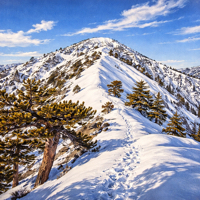
The Southern California stretch of the Pacific Crest Trail — a place near and dear to my heart; I live here and have section-hiked the PCT for years — took an especially hard hit, with trailheads, road approaches, water crossings, and low camps dragged or buried by mud and runoff. That stretch changes from low desert washes and sage-and-chaparral foothills up into oak and mixed-conifer slopes on the San Gabriel and San Bernardino ridgelines, then climbs into the higher San Gorgonio and San Jacinto country where pinyon, fir, and true montane/subalpine stands hold late snow. Expect everything from loose, rocky tread and brushy switchbacks to steep gullies that channel flash runoff — which is precisely the kind of terrain that turns a heavy storm into road-and-trail damage in a hurry. Post-storm, gateway towns are digging out, businesses and volunteers are scrambling, and land managers are triaging access and safety across the corridor.
Continue reading

Stop the National Park Surcharge Experiment

Redirect existing revenue, fix the backlog, and keep parks open to everyone.

California boasts nine national parks — more than any other state — that are part of the National Park Service, which protects and manages the more than 10,000 acres of mountains, deserts, seashore, and old-growth forest. Those parks sit alongside numerous other National Park Service–managed units — national monuments, historic sites, preserves, and cultural landscapes — all part of the vast U.S. National Park System, which protects millions of acres under a range of designations. Continue reading

Wildwood Canyon Named a State Park — Trails, Birds, Open Country

State Park and Recreation Commission formally classifies Wildwood Canyon State Park; the Yucaipa day-use area — open since 2003 — now moves into long-range planning with California State Parks.

Wildwood Canyon was formally classified and named Wildwood Canyon State Park by the State Park and Recreation Commission at its regular meeting on Dec. 17. The designation folds the Yucaipa day-use area — open to hikers, equestrians, and mountain bikers since 2003 — into California State Parks’ portfolio with new planning and stewardship responsibilities attached. The change won’t close trails or alter views from a ridge, but it does set the stage for long-range decisions on access, conservation, and historic resources within the state agency’s authority.
 
Located about 75 miles east of Los Angeles and roughly 25 miles east of San Bernardino and Riverside, the park is a patchwork of scrub oaks, manzanita, yucca, and chamise with broad views over the surrounding valleys. It sits along the Pacific Flyway and supports more than 100 species of birds across the seasons; terrestrial inhabitants include mule deer, black-tailed jackrabbits, rattlesnakes, and occasional mountain lions, so visitors should treat the place like real country — keep dogs leashed, stay on maintained trails, and be aware at dawn and dusk. The property already serves trail users of multiple kinds and will continue to do so while planners and community partners work through the next phase.
 
State Parks’ Inland Empire District staff have signaled gratitude for local support and emphasized that the agency will coordinate planning with the public, California Native American tribes, and other stakeholders. That process will produce a cornerstone document and a general plan to guide decisions about recreation, resource protection, and potential restoration projects. There are nine buildings on site, and two of them have been flagged as candidates for nomination to the California Register of Historical Resources. This factor could influence restoration priorities and public access over time.
 
For anyone who rides or hikes in Wildwood Canyon, the practical bottom line is simple: the trails you know remain, but the park is now entering an era of formal planning backed by the state. Expect public outreach, the posting of planning documents on the park website, and a measured effort to balance visitor access with habitat protection and historic preservation. If you haven’t been, bring water, mind the wildlife, and follow the park’s updates as California State Parks shapes how this landscape will be managed for the years ahead.
 
You can find out more about our newest park on the California State Parks website HERE.

King of the Hammers: BLM Closures and Spectator Tips – What Johnson Valley Visitors Need to Know

King of the Hammers is back. The world’s most extreme off-road race and a week-long desert festival, KOH mixes high-speed desert runs with brutal rock crawling that chews up equipment and separates the finished from the wrecked.
 
The festival runs January 22 through February 7, 2026, with qualifying and tech the week before the main event and a calendar that builds up to the Race of Kings on Saturday, February 7. Expect qualifying and tech February 2–4 (Monday–Wednesday), the UTV Hammers Championship on February 5 (Thursday), the Every Man Challenge on February 6 (Friday), and the Race of Kings — the headline 4400 Unlimited Class showdown — on February 7. Multiple race classes run through the week, so there’s action to watch every day when you’re in Hammertown.

Continue reading

MAPWaters Act: Digitizing Access to America’s Public Waters

The MAPWaters Act has cleared Congress and is headed to the President’s desk.

For people who boat, fish, hunt, or paddle on federally managed waters, this is a practical fix: the law directs agencies to digitize and publish recreational access information so users can find clear, up-to-date rules on phones and chartplotters, rather than digging through scattered paperwork.

Continue reading