Category Archives: Hikes

After the Flood: Southern PCT and Trail Towns Counting the Cost

Last week’s storms slammed the length of California, dumping heavy rain, triggering floods and debris flows from the Coast Range to the Sierra and through the Transverse Range all the way to the tip of the Peninsular Mountain Range.
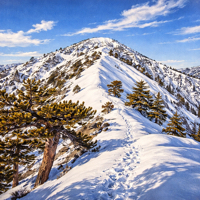
The Southern California stretch of the Pacific Crest Trail — a place near and dear to my heart; I live here and have section-hiked the PCT for years — took an especially hard hit, with trailheads, road approaches, water crossings, and low camps dragged or buried by mud and runoff. That stretch changes from low desert washes and sage-and-chaparral foothills up into oak and mixed-conifer slopes on the San Gabriel and San Bernardino ridgelines, then climbs into the higher San Gorgonio and San Jacinto country where pinyon, fir, and true montane/subalpine stands hold late snow. Expect everything from loose, rocky tread and brushy switchbacks to steep gullies that channel flash runoff — which is precisely the kind of terrain that turns a heavy storm into road-and-trail damage in a hurry. Post-storm, gateway towns are digging out, businesses and volunteers are scrambling, and land managers are triaging access and safety across the corridor.
Continue reading

Wildwood Canyon Named a State Park — Trails, Birds, Open Country

State Park and Recreation Commission formally classifies Wildwood Canyon State Park; the Yucaipa day-use area — open since 2003 — now moves into long-range planning with California State Parks.
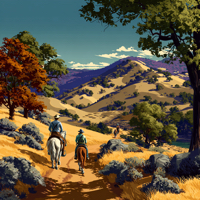
Wildwood Canyon was formally classified and named Wildwood Canyon State Park by the State Park and Recreation Commission at its regular meeting on Dec. 17. The designation folds the Yucaipa day-use area — open to hikers, equestrians, and mountain bikers since 2003 — into California State Parks’ portfolio with new planning and stewardship responsibilities attached. The change won’t close trails or alter views from a ridge, but it does set the stage for long-range decisions on access, conservation, and historic resources within the state agency’s authority.
 
Located about 75 miles east of Los Angeles and roughly 25 miles east of San Bernardino and Riverside, the park is a patchwork of scrub oaks, manzanita, yucca, and chamise with broad views over the surrounding valleys. It sits along the Pacific Flyway and supports more than 100 species of birds across the seasons; terrestrial inhabitants include mule deer, black-tailed jackrabbits, rattlesnakes, and occasional mountain lions, so visitors should treat the place like real country — keep dogs leashed, stay on maintained trails, and be aware at dawn and dusk. The property already serves trail users of multiple kinds and will continue to do so while planners and community partners work through the next phase.
 
State Parks’ Inland Empire District staff have signaled gratitude for local support and emphasized that the agency will coordinate planning with the public, California Native American tribes, and other stakeholders. That process will produce a cornerstone document and a general plan to guide decisions about recreation, resource protection, and potential restoration projects. There are nine buildings on site, and two of them have been flagged as candidates for nomination to the California Register of Historical Resources. This factor could influence restoration priorities and public access over time.
 
For anyone who rides or hikes in Wildwood Canyon, the practical bottom line is simple: the trails you know remain, but the park is now entering an era of formal planning backed by the state. Expect public outreach, the posting of planning documents on the park website, and a measured effort to balance visitor access with habitat protection and historic preservation. If you haven’t been, bring water, mind the wildlife, and follow the park’s updates as California State Parks shapes how this landscape will be managed for the years ahead.
 
You can find out more about our newest park on the California State Parks website HERE.

100th Annual Trek to the Nation’s Christmas Tree

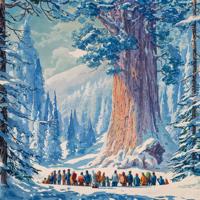
This month, Grant Grove in Kings Canyon will host the 100th Annual Trek to the Nation’s Christmas Tree. On December 14, assembling at 2 p.m. with the official ceremony beginning at 2:30 p.m. The event honors the General Grant Tree, the long-lived, enormous, and officially recognized “Nation’s Christmas Tree.” December 14 is also a free entrance day at Sequoia and Kings Canyon, so Grant Grove will see heavier foot traffic and limited parking. 
 
The General Grant Tree stands roughly 268 feet tall and is among the world’s oldest living trees — an apt living symbol for a national observance. President Calvin Coolidge designated it the Nation’s Christmas Tree on April 28, 1926. Congress later named it a National Shrine under Public Law 441 on March 29, 1956, and Fleet Admiral Chester W. Nimitz dedicated the tree on November 11, 1956, as a perpetual shrine honoring the nation’s armed forces. Those layers of designation give the site ecological, historical, and commemorative weight.

Continue reading

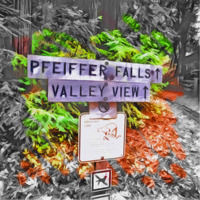
Newly Renovated Pfeiffer Falls Trail in Big Sur Now Open!

California State Parks and Save the Redwoods League work tirelessly to reopen popular trail

On June 21, 2008 a lightning strike ignited the Basin Complex Fire, a wildfire that swept through 162,818 acres near Big Sur, forcing evacuations, and burning most of the Ventana Wilderness area. The fire destroyed much of the Pfeiffer Big Sur State Park located the western slope of the Santa Lucia Mountains, and severely damaged the Pfeiffer Falls Trail, an easy 1.5 mile out-and-back trail with views of redwoods and Pfeiffer Falls.

After a 13 year renovation the trail is open again, thanks to the California State Parks and the Save the Redwoods League.

Continue reading

Camping and Hiking using CampingHiking.net

2020 was a difficult year for travelers, wanderers, adventurers, and explorers here in California. I did get out – sometimes with groups, sometimes furtively by myself – and was rewarded with solitude, silence, and freedom within the great cathedrals of nature that California offers from the deserts to the beaches, to the mountains and deep forests.

As with any exploration, it’s all about knowledge and preparedness. My hardware set is pretty solid – if I can’t get out of a jamb, I can call someone to come and find me – but this year my software set has been a bit lacking. 

Continue reading