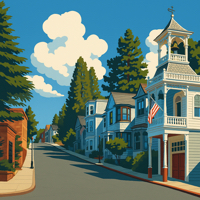
Built where the Nisenan village of Ustumah once stood, Nevada built itself around gold and water with the first sawmill and the Gold Tunnel on Deer Creek arriving in 1850, and it became the engine of California’s mining world. The town was incorporated in 1856 and added “City” to the name in 1864 to avoid confusion with California, a neighboring state.
Walk through historic downtown, and you can see history in clapboard, carved gingerbread, and the lofty windows of buildings that once financed dreams.
Continue reading →
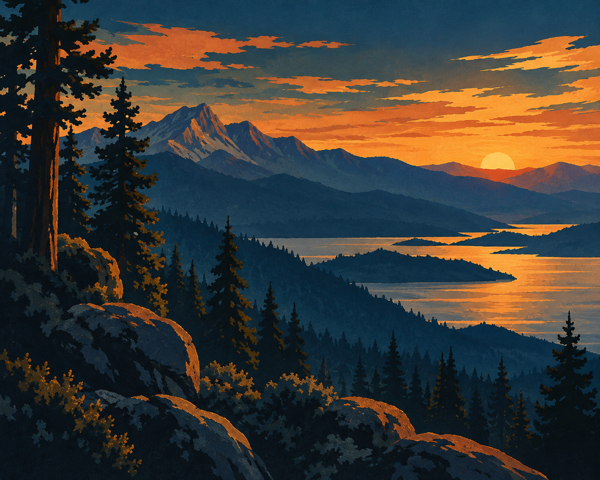

 A stubborn storm parked over Death Valley on November 15, 2025, and the desert didn’t know what hit it: Furnace Creek recorded 0.6 inches of rain — a number that’s more than a quarter of the park’s usual annual total. In terrain that sheds water off bedrock and washes it down into narrow canyons, that half-inch-plus didn’t soak in; it ran hard and fast, turning arroyo channels into destructive flows of mud, rock, and debris that have chewed up road shoulders and left pavement buried or gone.
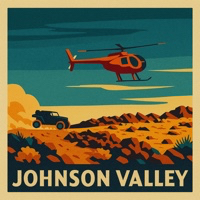 The Johnson Valley community has been holding its breath these past months as the U.S. Marine Corps’ Special Use Airspace proposal, R2509, moves through the public process. After an intense wave of local comments and outreach, momentum slowed during the government shutdown — but the Marines have since released public fact sheets about the proposal. That put new material in front of the public, and it’s precisely the sort of moment when clear information matters most.
 Ferndale is a small, storybook town on the edge of California’s Lost Coast that feels like stepping back into the Victorian age. Tucked into a broad coastal plain in Humboldt County, the town is famous for its brightly painted Victorian “Painted Ladies,” ornate storefronts, and a deep dairy heritage that once earned it the nickname “Cream City.” A stroll down Main Street—now part of a nationally recognized historic district—reveals the same gingerbread trims and turrets that brought movie crews and curious roadtrippers to town. 
 Truckee feels like a town that learned to keep its winter boots close to a warm hearth. Born as Gray’s Station in 1863, around Joseph Gray’s roadhouse, then briefly known as Coburn’s Station for blacksmith Samuel Coburn, the place settled on the name Truckee when the Central Pacific christened its depot in 1867. The name itself was lifted from a Paiute chief—Tru-ki-zo—whose shouted “Tro-kay!” (“Everything is all right”) was misheard as a name by early travelers.