
 If you’ve been looking for an excuse to visit one of California’s national parks, Tuesday might be the day.
The National Park Service is waiving entrance fees on Tuesday, October 27, 2026, in celebration of Theodore Roosevelt’s birthday. The fee-free day applies to national parks and other National Park Service sites that normally charge admission throughout California and across the United States.
There’s one change this year. Free admission is limited to U.S. citizens and residents. International visitors must pay regular entrance fees and any applicable nonresident charges.
Where Can You Go in California?
California has nine national parks, and Tuesday’s entrance fee waiver covers those that normally charge an admission fee.
That includes Yosemite, Sequoia, and Kings Canyon in the Sierra Nevada; Joshua Tree and Death Valley in the Southern California deserts; Pinnacles along the Central Coast; and Lassen Volcanic National Park in Northern California.
Redwood and Channel Islands national parks don’t charge general entrance fees, so admission there is already free year-round. Transportation to the Channel Islands, however, is another matter.
The waiver also applies to fee-charging national monuments and other National Park Service properties, including Muir Woods National Monument in Marin County, Lava Beds National Monument in Northern California, and Cabrillo National Monument in San Diego.
Keep in mind that free admission doesn’t mean everything inside the park is free. Camping fees, special-use permits, transportation charges, and reservation fees still apply. Muir Woods, for example, requires advance parking or shuttle reservations even on fee-free days.
Why Theodore Roosevelt?
Theodore Roosevelt, America’s 26th president, was born on October 27, 1858, and became one of the most influential conservationists ever to occupy the White House.
During his presidency from 1901 to 1909, Roosevelt established the U.S. Forest Service, created 150 national forests, designated 18 national monuments, and established five national parks. Altogether, his administration protected approximately 230 million acres of public land.
California played an important part in that history.
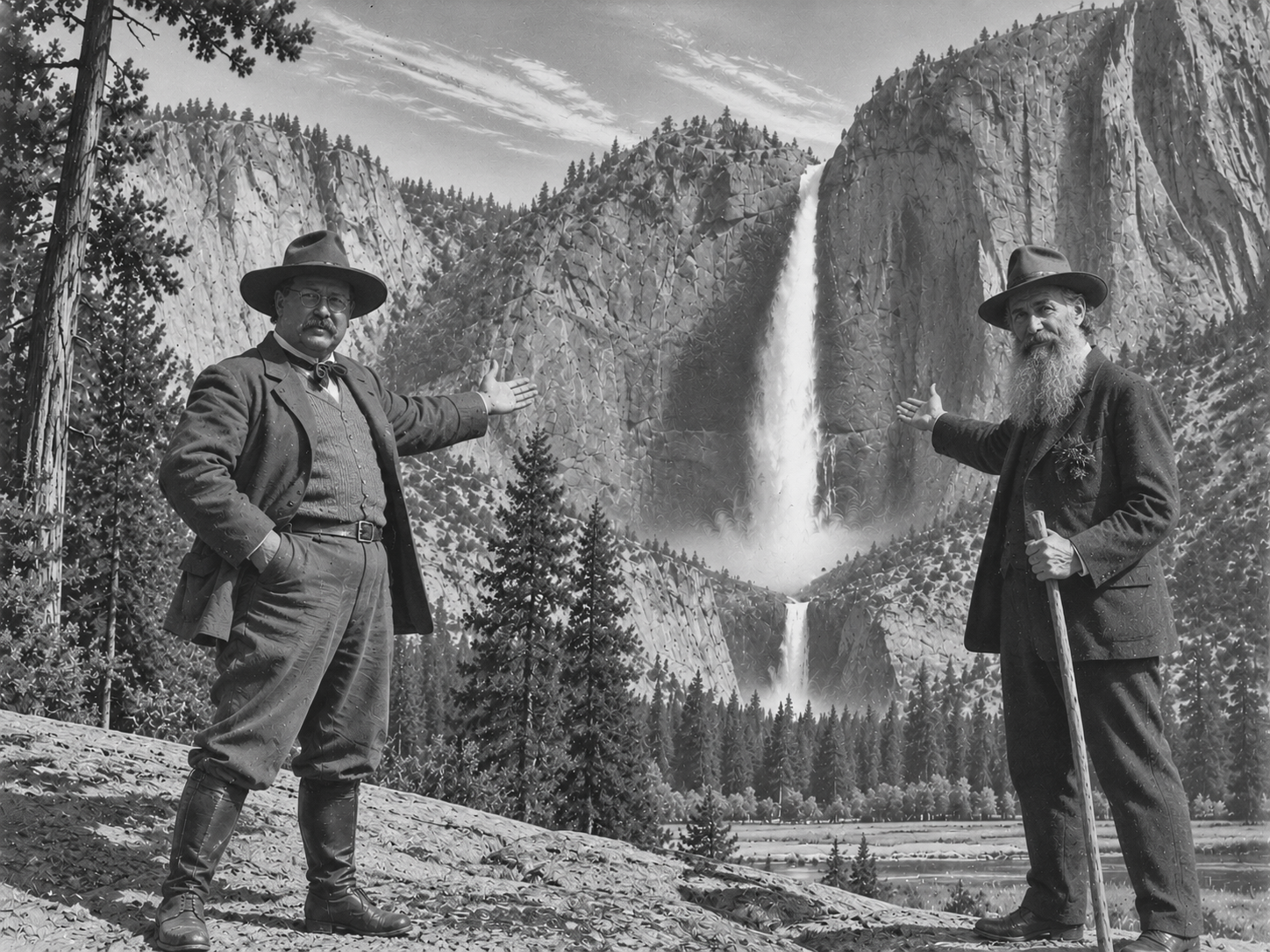
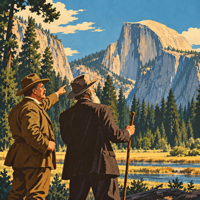
In May 1903, Roosevelt spent several days camping in Yosemite with naturalist John Muir. The two visited the Mariposa Grove of giant sequoias, camped near Sentinel Dome during a snowstorm, and discussed the future of America’s forests and public lands.
That visit helped shape Roosevelt’s conservation policies. In 1906, Yosemite Valley and the Mariposa Grove returned from California state administration to federal control, bringing them under unified protection with the surrounding national park.
Roosevelt also used the Antiquities Act of 1906 to protect several California landmarks. He established Lassen Peak and Cinder Cone national monuments in 1907, followed by Muir Woods and Pinnacles in 1908. Lassen Peak and Cinder Cone later became part of Lassen Volcanic National Park, while Pinnacles became a national park in 2013.
The National Park Service itself wouldn’t be established until 1916, during President Woodrow Wilson’s administration. But Roosevelt had already helped lay much of the groundwork.
One More Free Admission Day in 2026
Tuesday is the second-to-last scheduled fee-free occasion of 2026. The final date is Veterans Day, Wednesday, November 11.
The National Park Service scheduled eight fee-free occasions this year, including Presidents Day, Memorial Day, Flag Day, Independence Day weekend, the National Park Service’s 110th birthday, Constitution Day, Theodore Roosevelt’s birthday, and Veterans Day.
Before heading out, check the individual park’s website for current road closures, seasonal restrictions, weather conditions, and reservation requirements. Late October can bring snow to the Sierra Nevada, while desert parks generally offer more comfortable daytime temperatures than during the summer months.
You can find park information, entrance requirements, and the complete fee-free calendar HERE
And if you can’t get away Tuesday, mark November 11 on your calendar. It’s your last scheduled opportunity this year to enter California’s fee-charging national parks without paying an entrance fee.