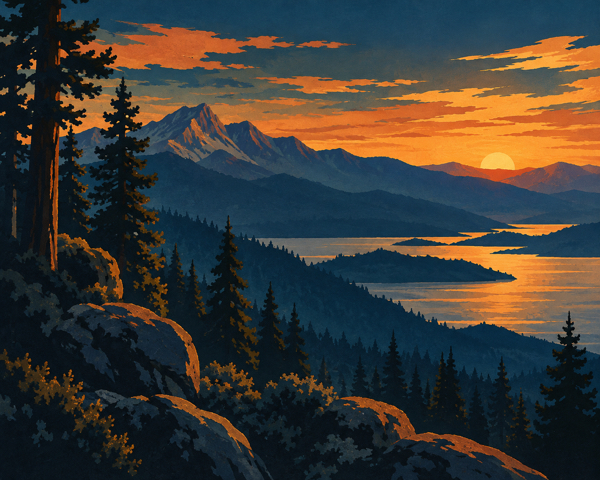

 The U.S. Army was protecting California’s national parks long before there was a National Park Service. This Veterans Day, those parks are opening their gates for free.
Wednesday, November 11, is Veterans Day, and the National Park Service is waiving entrance fees at participating national parks and other National Park Service sites across the country. Here in California, that includes Yosemite, Sequoia, Kings Canyon, Joshua Tree, Death Valley, and the other parks that normally charge admission. It’s the final scheduled fee-free day of 2026, and a good excuse to spend the holiday outdoors.
The fee waiver applies to U.S. citizens and residents. International visitors remain subject to regular entrance fees and any applicable nonresident charges. Camping, reservations, and other special-use fees still apply.
Veterans Day has its traditions, from ceremonies at military cemeteries to parades honoring those who served. There’s also something fitting about spending the day in one of America’s national parks, particularly when you consider how much of their early history is tied to the United States military. California has some of the best examples of that history, and much of it is still there for visitors to see.
Before the Park Rangers, There Was the U.S. Cavalry
When Congress established Yosemite National Park in 1890, there was no National Park Service to manage it. The federal government turned to the United States Army, which sent troops from the Presidio of San Francisco into the Sierra Nevada each summer to protect Yosemite, Sequoia, and General Grant national parks.
These weren’t ceremonial assignments. Soldiers patrolled thousands of acres of mountain country, enforcing regulations against illegal grazing, timber cutting, and poaching. They maintained roads and trails, fought forest fires, and dealt with visitors who weren’t always inclined to follow the rules. The work required long days in the saddle, considerable time away from their regular posts, and a familiarity with the Sierra Nevada that few civilians possessed.
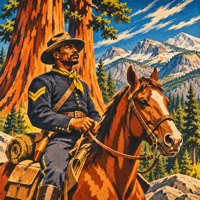
Among the troops assigned to California’s national parks were the Buffalo Soldiers, African American servicemen from the Army’s segregated regiments. Members of the 9th Cavalry and 24th Infantry served in Yosemite and Sequoia, contributing to the early development of the parks while performing the same protective duties as their fellow soldiers.
One of the most remarkable figures from that period was Captain Charles Young of the 9th Cavalry. In 1903, Young became acting superintendent of Sequoia and General Grant national parks, making him one of the first African American national park superintendents. His soldiers completed significant road improvements during their summer assignment, including work that made the Giant Forest more accessible to visitors.
Young’s accomplishments are particularly impressive when you consider the circumstances. He was an African American Army officer serving in a segregated military, commanding soldiers in remote mountain country at a time when racial discrimination remained deeply entrenched in American society. His leadership and the work of the Buffalo Soldiers helped establish the foundation for civilian park management.
The National Park Service wasn’t created until 1916, and the Army’s years of managing California’s early national parks remain an important chapter in the history of public land protection. Those soldiers weren’t simply guarding the forests. They were helping establish how the federal government would care for them.
From Yosemite to the Pacific: California’s Military Parklands
The military’s relationship with California’s national parks continued well into the 20th century, although the nature of that relationship changed considerably.
During World War II, Yosemite received military visitors, including members of the 3rd Engineer Special Brigade. The park also became home to a naval convalescent hospital, where service members recovering from illness and injury received treatment in Yosemite Valley. The Navy operated the facility at the former Ahwahnee Hotel from 1943 until 1945, bringing an entirely different kind of military presence to one of California’s best-known mountain destinations.
Along the California coast, the military had been preparing for a different kind of war. The Presidio of San Francisco and the surrounding coastal defenses guarded the entrance to San Francisco Bay for generations. Artillery batteries, observation posts, and other fortifications occupied strategic positions overlooking the Pacific and the Golden Gate.
Much of that former military property now belongs to Golden Gate National Recreation Area. Visitors can walk among the remains of coastal gun batteries, visit Fort Point beneath the Golden Gate Bridge, and explore military installations that once formed part of the nation’s coastal defense system.
Southern California has its own military history preserved within the national park system. At Cabrillo National Monument on Point Loma, the remains of Fort Rosecrans tell the story of San Diego’s coastal defenses.
Established in 1899, Fort Rosecrans protected the approaches to San Diego Harbor. During World War II, the Army expanded the installation’s defenses, including Battery Ashburn, which mounted two 16-inch coastal artillery guns. These enormous weapons could fire 2,300-pound projectiles nearly 30 miles offshore, providing protection against enemy warships approaching the harbor.
The military even put the old Point Loma Lighthouse to work. The Army painted the historic structure olive green and used it for communications and observation during the war.
Today, Cabrillo National Monument preserves much of that history. The park’s Bayside Trail passes remnants of military installations, and its Coast Defense Exhibit explains the role Point Loma played in protecting San Diego. It’s an excellent destination for anyone interested in California military history, and particularly appropriate for a Veterans Day visit.
A Good Day to Get Outside
You don’t have to visit a former military installation to spend Veterans Day in a national park. California has nine national parks, along with national monuments, historic sites, and recreation areas managed by the National Park Service. From the redwood country of the North Coast to the desert landscapes of Southern California, there’s plenty of ground to cover.
For Southern California residents, Joshua Tree National Park is a good November destination. Summer’s extreme heat has generally given way to cooler temperatures, making hiking and exploring the park’s granite formations considerably more comfortable. Death Valley National Park is also entering its prime visiting season, although daytime temperatures can still be warm and road conditions should always be checked before heading into the backcountry.
Cabrillo National Monument offers an easier outing for those near San Diego. Its coastal trails, historic lighthouse, and military exhibits make it possible to spend several hours outdoors without committing to a long drive or an all-day hike.
Farther north, Yosemite and Sequoia offer entirely different conditions. November marks the beginning of winter in the Sierra Nevada, and early storms can close mountain roads or require tire chains. Tioga Road and Glacier Point Road in Yosemite are particularly susceptible to seasonal closures, while higher elevations in Sequoia and Kings Canyon can receive significant snowfall.
Check the individual park’s website before leaving home. A free entrance day doesn’t do much good if the road to your intended destination is closed.
For veterans, there’s another reason to consider a day in the parks. Spending time outdoors doesn’t require a particular destination or an ambitious hiking itinerary. An afternoon walking through a sequoia grove, following a desert trail, or visiting an old coastal artillery battery can be a fine way to spend a holiday dedicated to military service.
And if you’ve got an old service buddy who hasn’t been out in a while, give him a call. You might both enjoy the excuse.
Veterans Can Visit Federal Recreation Lands Free Year-Round
Veterans Day isn’t the only opportunity for military veterans to visit national parks without paying an entrance fee.
The National Park Service offers a free lifetime Military Pass to eligible U.S. military veterans and Gold Star Families. Active-duty military personnel and their dependents can obtain a free annual Military Pass.
These passes are part of the America the Beautiful federal recreation pass program and cover entrance fees and standard day-use fees at participating federal recreation sites. That includes properties managed by the National Park Service, U.S. Forest Service, Bureau of Land Management, U.S. Fish and Wildlife Service, Bureau of Reclamation, and U.S. Army Corps of Engineers.
Veterans can obtain the lifetime pass in person at participating federal recreation sites by presenting acceptable identification, such as a Veteran Health Identification Card, Veteran ID Card, or a state-issued driver’s license displaying veteran status. The pass is free when obtained in person, although online orders may include processing and shipping charges.
The pass does not generally cover camping, special permits, or other expanded amenity fees. Full eligibility requirements and application information are available through the National Park Service’s Military Pass program.
Make Your Veterans Day Plans
Wednesday, November 11, is the last scheduled national park entrance fee-free day of 2026. The waiver covers participating National Park Service sites across the United States. Parks that already offer free general admission, including California’s Redwood and Channel Islands national parks, won’t see any change.
Before heading out, check for weather-related closures, reservation requirements, and seasonal restrictions. If you’re planning a trip to Muir Woods National Monument, remember that parking or shuttle reservations are still required. And if you’re heading into the mountains, pay attention to the forecast. November weather in California can change quickly, particularly above 6,000 feet.
Veterans Day belongs to the men and women who served this country. Some of them spent their military careers protecting the very public lands we enjoy today. Others served far from California’s mountains and deserts, but came home to a country whose national parks remain open for all of us to enjoy.
If you’ve served, or know someone who has, Wednesday is a good day to take advantage of that legacy. Find a park, pick a trail, and spend some time outdoors.
And get some dirt under your old military boots!
Resources
- See National Park Service – Veterans Day HERE.
- See National Park Service – Past Military Uses of Parks HERE.
- See National Park Service – American Military History HERE.
- See National Park Service – Buffalo Soldiers HERE.
- See National Park Service – Free Entrance Days HERE.
- See National Park Service – Military Passes for Veterans and Gold Star Families HERE.
- See Yosemite National Park HERE.
- See Sequoia & Kings Canyon National Parks HERE.
- See Cabrillo National Monument HERE.
- See Golden Gate National Recreation Area HERE.