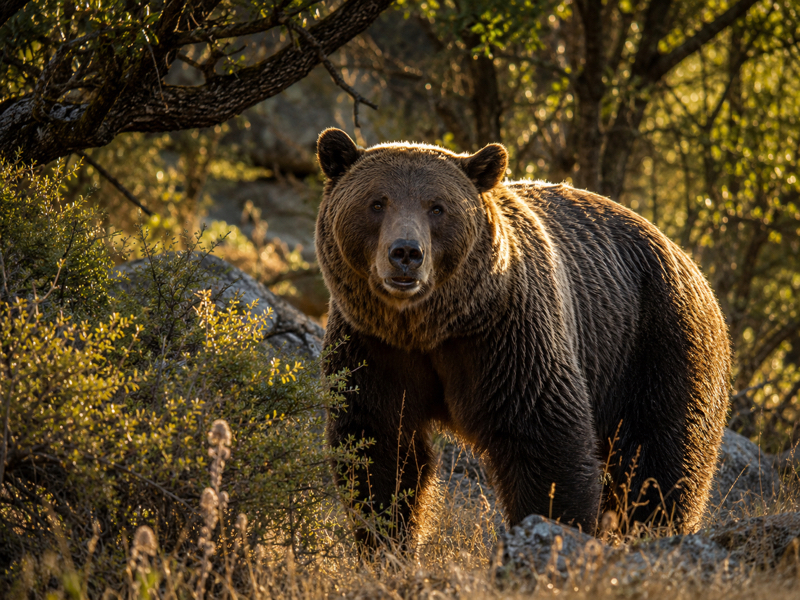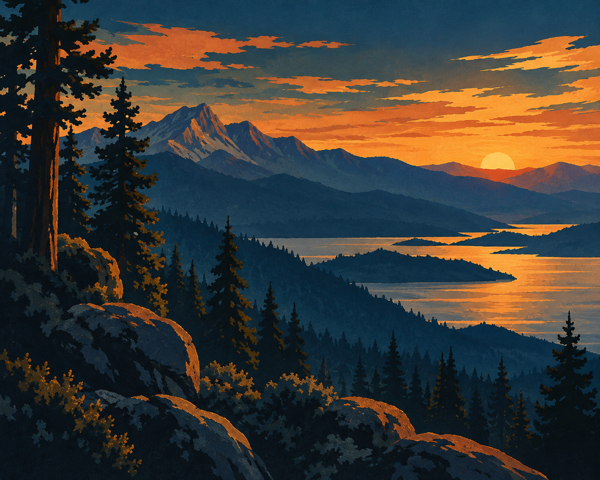

 Senate Bill 1305 would have required the state to study the feasibility of reintroducing grizzlies. It never got a vote – and the fight isn’t over.
California has a grizzly bear on its flag, on its state seal, and on the jerseys of two university mascots. It has not had a wild grizzly bear inside its borders in more than a hundred years. On August 13, a bill that would have taken the first real step toward changing that died in an Assembly committee room without a single public word said about it.
What Suspense Day Actually Does to a Bill
Every bill that carries a cost to the state has to clear the Assembly Appropriations Committee before it can reach a floor vote, and once a year, that committee works through a stack of bills on what’s called Suspense Day. Bills get sorted into two piles: move forward, or get spiked. There’s no debate on the spiked ones. No public testimony. No explanation beyond the decision itself.
Senate Bill 1305, the California Grizzly Restoration Act, got spiked on August 13. Its author was Sen. Laura Richardson, who represents the state’s 35th District, and the bill wouldn’t have released a single bear anywhere. It would have directed the California Department of Fish and Wildlife to develop a roadmap – Fish and Wildlife’s own term – evaluating whether, where, and under what conditions a grizzly reintroduction might be feasible. Two Native American tribes cosponsored it. The agency would have had until June 30, 2030, to finish the work, in consultation with tribes and local communities.
The first year of that study alone was projected to run $5.2 million, and the bill never identified where the money would come from. According to reporting on the bill’s demise, the state hasn’t fully funded its existing programs for managing human-wildlife conflict in years – the same conflict-mitigation infrastructure that would have to absorb a grizzly on top of the mountain lions, black bears, and returning gray wolves it’s already stretched to cover.
Assembly Appropriations Committee chair Buffy Wicks, an Oakland Democrat, made the call, citing the wolf situation as the reason. Gray wolves have been trickling back into California on their own since 2011, and their return has already meant cattle losses and real anger in ranching country. Wicks argued the state needs to prove it can handle the predator conflicts it already has before it studies adding a bigger one.
Opponents lined up behind that argument. Sen. Megan Dahle, who represents a large swath of rural Northern California, said the bill drew more constituent concern than almost anything else on this year’s docket, and she credited local sheriffs, ranchers, farmers, and hunting groups for making the case that “one more top-level predator was more than rural California could take.” Supporters made a different case entirely. Yurok Tribe wildlife department director Tiana Williams-Claussen testified in June that “that loss lingers in our heart and in the attenuation of a millennia-old relationship.” The full scope of what disappeared with the grizzly, she said, still isn’t understood.
Ten Thousand Bears
Researchers estimate roughly 10,000 grizzlies lived across the state before Spanish settlement took hold in the second half of the 1700s, and they weren’t confined to the mountains. They ranged through nearly the entire state – coastal chaparral, oak woodland, hardwood forest, the Central Valley, the foothills – with only the far southeastern and northeastern corners outside their territory. The first documented European sighting came in 1603, when a Spanish explorer near Monterey watched grizzlies feeding on a beached whale carcass. That report barely circulated. It took the overland Portola expedition of 1769 to put grizzlies on the map for good – literally, in places like Los Osos, where the Spanish word for bear is baked into the name.
These were big animals, though not quite the giants of frontier legend. Nineteenth-century newspapers loved to report bears topping 1,000 pounds, and one 1866 bear killed near what’s now Valley Center in San Diego County was said to weigh as much as 2,200 pounds – if that number holds up, it would rank among the largest bears of any species ever recorded. Museum specimens tell a more modest story: average body size estimates run from about 229 to 556 pounds depending on the method. Still formidable. Just not mythical.
They ate almost everything the state offered – grasses, acorns, berries, elk, deer, salmon, steelhead, carrion, and, along the coast, the occasional stranded whale. Once Spanish and Mexican ranchers introduced cattle, the bears added beef to their menu, and that single dietary shift set the two species on a collision course that would leave only one standing.
From Rebel Flag to State Seal
The grizzly earned its spot on California’s flag through a very specific, very short-lived act of rebellion. In June 1846, a group of American settlers in Sonoma raised a homemade flag and declared California an independent republic, breaking from Mexico. That flag carried a crude grizzly, and the uprising became known as the Bear Flag Revolt. The republic lasted less than a month before U.S. military forces absorbed California into the growing United States, but the bear stuck around. It became a permanent fixture of the state seal in 1849, and the Legislature formally adopted a refined version of the Bear Flag as the official state flag in 1911. California named the grizzly its official state animal in 1953.
Even Yosemite likely owes its name to the bear. The word probably traces to the Ahwahneechee term for grizzly, rendered variously as “Oo-soo-mah-ty” or “Yo-hem-ah-ty.” James Hutchings, one of the earliest promoters of Yosemite tourism, later named the park’s giant sequoia the Grizzly Giant specifically to borrow the animal’s reputation for size and staying power.
How California Emptied the Landscape
Spanish ranchers started the process in the late 1700s with poisoned bait – suet or swine entrails loaded with strychnine and hung from tree branches, positioned to be reachable by bears but not by dogs or children. Mexican-era vaqueros captured bears alive for public bear-and-bull fights, a bloodsport that drew crowds and heavy betting through much of the nineteenth century. Grizzly hides sold to trading ships for six to ten pesos each. One bear was made into a chair and presented as a gift to President Andrew Johnson in 1865.
The killing accelerated as the cattle economy, which had briefly fed the bear population, collapsed. Severe drought and flooding in the 1860s and 1870s wiped out huge numbers of ranch cattle, and with their easiest food source gone, grizzlies turned toward the livestock that remained – which only intensified the campaign against them. Bounties followed. So did a market for grizzly meat, which turned up on San Gabriel Valley restaurant menus, with bear paws and cub meat marketed as delicacies.
Individual hunters did staggering damage on their own. Absolom “Rocky” Beasley claimed 139 grizzlies killed across the Santa Lucia Mountains. Seth Kinman, a Humboldt County mountain man, claimed more than 800 over twenty years. William Holcomb hunted grizzlies so relentlessly through what’s now San Bernardino County that he picked up the nickname “Grizzly Bill.”
The Last Grizzly
By the early 1920s, there weren’t many bears left to find. In 1920, a grizzly known as Two Toes – he’d lost part of a front foot to a trap – was still evading hunters in the Shuteye Peak area of Madera County, one of the last known individuals in the state. The final confirmed kill came in August 1922, in Tulare County, though no body, skeleton, or pelt was ever produced to document it. Less than seventy-five years after gold turned up at Sutter’s Mill in 1848, California had hunted almost every grizzly bear within its borders to extinction. The last reported sighting of what was believed to be a grizzly occurred in 1924 at Sequoia National Park. After that, nothing. The state’s only surviving native bear became the smaller, shyer black bear – the one that still shows up in trash cans and campgrounds today.
What Other States Are Doing With Their Predators
Colorado voters forced the issue directly, passing a 2020 ballot measure that required the state’s game agency to release wolves regardless of what wildlife managers preferred. Colorado Parks and Wildlife released ten wolves from Oregon in December 2023, and the program has run into serious trouble ever since – exactly the kind of outcome that opponents of SB 1305 pointed to as a cautionary tale.
Washington’s North Cascades offers a slower, more institutional model. The National Park Service and U.S. Fish and Wildlife Service announced a decision in 2024 to actively restore grizzlies to that region, but no bears have been released, and no release timeline has been set yet.
Grizzly populations in Idaho, Montana, and Wyoming took a third path entirely: no reintroduction at all, just protection and time. More than 1,000 grizzlies now live in the Greater Yellowstone Ecosystem as a result, and the Interior Department has recently moved to hand more of that population’s management back to the states.
Where This Leaves California
Two tribes backed SB 1305. So did environmental and animal welfare groups. What sank it was a $5.2 million study with no funding attached, arriving at the exact moment ranchers and rural lawmakers were pointing at an active, unresolved wolf conflict as proof the state can’t yet handle what it already has.
Nothing in how this bill died permanently closes the door. The language explicitly left room for a future Legislature, or an outside group, to pick the funding question back up. For now, the only grizzly bears in California are the ones in zoos, the one on the state seal, and the one on the flag that’s flown over the Golden State.