Tag Archives: sierra nevada

Returning Sierra Nevada bighorn sheep to the heart of Yosemite

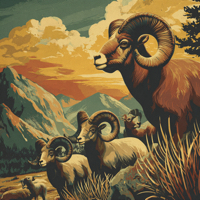
Sierra Nevada bighorn sheep are back in Yosemite’s Cathedral Range after over 100 years of absence!

Between March 26 and April 3, 2015 seven ewes were moved to the Laurel Creek area of Sequoia National Park. During this same time period ten ewes and three rams were were moved from the Inyo National Forest and Sequoia National Park and released into the cliff habitat of the Cathedral Range in Yosemite National Park. All migrated sheep are in great condition, with nine of the Cathedral Range ewes pregnant (the single non-pregant ewe is a yearling).

From the National Park Press Release:

A multiagency operation was recently concluded that returned two herds of endangered bighorn sheep to locations in Yosemite and Sequoia National Parks. The California Department of Fish and Wildlife (CDFW), Yosemite, Sequoia, and Kings Canyon National Parks, Inyo National Forest, and the U.S. Fish and Wildlife Service, worked together on the complex operation in the Sierra Nevada.
Continue reading

Portrait of a Giant Sequoia… #NGM

Imagine if you will, taking a picture of a tree.  Get every branch from the base to the tip in the picture.

Sounds easy, right?

Now imagine that the tree is 3,200 years old, 247 feet tall, has two billion needles and is continuing to grow even as you look at it.  All of a sudden, that little iPhone you’ve got in your pocket just isn’t going to cut it.

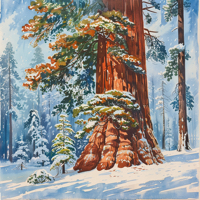
The Giant Sequoias only grow in Northern California, and they only grow in one tiny little area: the western slope of the Sierra Nevada.  One of the oldest and largest trees growing there is the President.  It’s 247 feet tall, sports a 27 foot diameter trunk (which is svelte compared to two of other local trees), and has the largest crown of any of the Giant Sequoias in the grove.

So how hard can it be to take a picture of a tree?  It’s not like it’s going to wander off or anything, right?  Well, this particular tree is so massive that it’s never been photographed in it’s entirety.  Ever.

Continue reading

Thru-hike the roadless Sierra

Backpacker Magazine put up an EXCELLENT appetite whetting hiking guide to one of the most scenic parts of the Pacific Crest Trail.

For those who don’t know, the Pacific Crest Trail is a long-distance hiking and equestrian trail that follows some of the highest pats of the Sierra Nevada and Cascade mountain ranges from Mexico to Canada, crossing Califoria, Oregon and Washington.  It is 2,663 miles long, passes through 25 national forest and 7 national parks.  The trail became a National Scenic Trail in 1968.

From Backpacker Magazine:

The Hike
The best section of the most scenic long trail in the country is the 203.7-mile stretch in the central Sierra from Kennedy Meadows Campground to Red’s Meadow Campground. In that span, the PCT crosses Sequoia and Kings Canyon National Parks and the John Muir Wilderness–and never meets a single road. It’s the longest roadless span on any National Scenic Trail in the country. On the way, you’ll have a chance to summit Mt. Whitney (the Lower 48’s highest point at 14,497 feet) and experience the legendarily gentle weather of California’s central Sierra. Plan for 10 to 15 days to cross this roller coaster of subalpine and glaciated terrain.

Continue reading

CDFW Creates First Bighorn Sheep Herd in 25 Years

The California Department of Fish and Wildlife and volunteers from around the state, have established a brand new herd of Sierra Nevada bighorn sheep.

During the last week in March ten 10 female and four male bighorn sheep were captured from two of the largest existing herds in the Sierra Nevada and released together at Olancha Peak near the southern end of the Sierra Nevada range in Inyo County.  The Convict Creek and Mount Gibbs herds were augmented by adding six females to those small herds.

From the press release:

“This is the first reintroduction effort of a new herd of Sierra Nevada bighorn sheep since 1988,” said Tom Stephenson, CDFW bighorn recovery program leader.

Historically, Sierra bighorn were abundant throughout the Sierra Nevada; however, by the 1970s, only two herds remained. Disease spread by domestic sheep and unregulated commercial hunting are believed to have caused their demise.

“Many endangered species remain on the brink of extinction with poor prospects for recovery after they receive federal protection,” said Stephenson. “Through our conservation efforts, we have a unique opportunity to reach recovery goals for an alpine specialist that is native only to California.”

You can read the full press release HERE.