

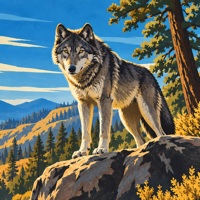
 Why did the gray wolf cross the road? Nobody knows yet.
A gray wolf was spotted in northern Lake County in late August, and it’s the first confirmed sighting west of Interstate 5 since the species began returning to California.
The California Department of Fish and Wildlife got two reports and a set of photos from the area where Mendocino, Glenn, and Lake counties meet. A CDFW wolf biologist checked the photos, surveyed the area, and found wolf tracks at one of the two sighting locations. The agency believes it’s a single, dispersing black wolf – one animal moving on its own, likely still searching for territory or other wolves. It may have already left the county.
The First Confirmed Sighting West of I-5
Most of California’s wolf recovery over the last decade and a half has happened east of Interstate 5, in the ranching country of the state’s far northeastern counties. West of the interstate is a different landscape – more elk, more deer, and historically fewer wolves competing with cattle operations for space. State gray wolf coordinator Axel Hunnicutt says that an animal making it this far west is a sign that the population continues to expand its range. However, it’s also possible this is just one disperser and nothing more. Nobody knows yet whether others will follow.
Wiped Out by the 1920s
Wolves were trapped and killed across California through the late 1800s and early 1900s until the species disappeared from the state by the 1920s. They stayed gone for nearly ninety years. In 2011, a wolf known as OR-7 crossed south from Oregon and became the first wolf documented in California since 1924. The Shasta Pack, the state’s first modern pack, formed in 2015. As of July 2026, CDFW counts at least 50 wolves in 11 confirmed packs, almost all of them in the northeastern part of the state. No agency reintroduced them. They came back on their own, dispersing south along the Cascades from populations in Oregon and Idaho.
Still Protected, For Now
Gray wolves are listed as endangered under both the California Endangered Species Act and the federal Endangered Species Act. It’s illegal to hunt, pursue, harass, catch, capture, or kill one anywhere in the state, and there’s no wolf hunting season here. Ranchers have one legal tool right now: non-injurious hazing, allowed under CDFW guidance when a wolf comes within a quarter mile of livestock or within 100 yards of a home.
Trump’s Executive Order
On September 4, 2026, President Trump signed an executive order called “Supporting America’s Ranchers.” It gives Interior Secretary Doug Burgum 90 days to decide whether gray wolves and Mexican gray wolves have recovered enough to have their Endangered Species Act protections reduced or removed. The order also directs officials to look at loosening the rules for when ranchers can legally kill a wolf threatening livestock, and to review the federal programs that compensate ranchers for animals lost to wolf predation. The order doesn’t remove any protections. It starts a review process, and a 2022 federal court order currently keeps wolves protected across most of the lower 48 states.
Where I Come Down on This
Hazing is the only legal response a rancher has right now, and a confirmed kill already costs money that compensation programs don’t always cover in full. I don’t have a problem with giving ranchers a real option beyond that.
What wiped wolves out of California the first time wasn’t managed removal with limits. It was decades of government trapping and poisoning campaigns aimed at protecting livestock – no permits, no caps, no plan for what came after the population hit zero. A rancher with an approved lethal-removal permit on a wolf that’s already killed livestock is a different animal than that. One was extermination. The other is management with rules attached.
Whether any of this is good news for the wolves is a separate question, and I don’t think anyone actually knows the answer yet. The Center for Biological Diversity and WildEarth Guardians have both come out against the order, arguing that the population is still rebuilding and that Mexican gray wolves, in particular, can’t afford the genetic hit of losing protections early. That’s a real concern. It just isn’t the rancher’s problem to solve.
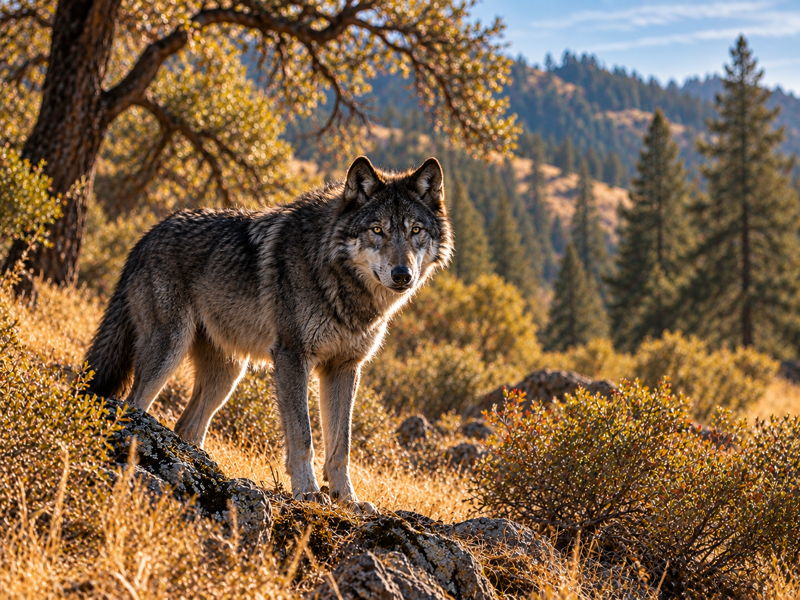
CDFW wants to hear about wolf sightings anywhere in California – reports and photos both help biologists track how the population is spreading. If you run into one on a trail, don’t run. Make noise, hold eye contact, and back away slowly.
To report a gray wolf sighting, go HERE
For the latest news on the gray wolf, go HERE
For information on fish and wildlife in California, go HERE