





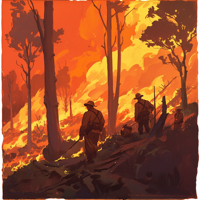
 A deer hunter — not pot growers, as some politicians with an agenda publicly stated — started the Rim Fire that burned through over 237,341 acres of land in the Stanislaus National Forest and Yosemite National Park before firefighters finally got the upper hand. The 402 square mile fire blazed through more than $127 million of taxpayer money just fighting it. It began in the steep hills of the remote Jawbone Ridge area to the east of Groveland on August 17, 2013 and quickly spread out of control. Losses are estimated to be in excess of $50 million.
 As the holidays get close, and the air cools off a bit (yep, I’ve already dug out my flannel-lined jeans!) don’t forget our California State Parks. CalParks Park Champions program operates year round to help restore the natural ecosystems in state parks or assist with much needed general maintenance projects.
You can join one of the many volunteer teams who are helping to keep our parks going. Current projects include improving the vital habitat at Half Moon Bay (San Mateo), Silver Strand (San Diego), or Palomar Mountain (San Diego), repairing trails at Wildwood Canyon in San Bernardino, and you can even help with general park maintenance at Candlestick Point in San Francisco.
 Mary Forgione, the Los Angeles Times’ Daily Deal and Travel Blogger has written an article about winter vacation deals in Utah and California. It turns out that there are some great weekday deals in and around our national parks. In California, for example, Sequoia & Kings Canyon national parks have fewer visitors, snow, and low prices!
 Press release from the USDA:
Stanislaus Forest Supervisor Susan Skalski today announced the second phase of the Rim Fire recovery, Notice of Intent to prepare an Environmental Impact Statement (EIS) that will appear in the Federal Register December 6. The proposed action will include:
 Yep. Since 2007, the self-publishing part of the ebook pie has been sizable. In just a few years, the self-published author has gone from zero to hero, owning 25% of the top 100 ebook market, as reported by Amazon. No matter how many reports traditional publishers put out – saying people are eschewing ebooks, that kids don’t like ebooks, and that ebooks are the bane and scourge of the publishing world – it appears that those bought-and-paid-for ‘statistics’ aren’t based on the cold hard numbers generated by their greatest imagined enemy: Amazon.