


 Red Rock 4-Wheelers, Inc., organizers for the Easter Jeep Safari, have officially cancelled the 2020 edition of the long-running event. I’m not particularly thrilled with this development, as I feel that it doesn’t show an ‘overabundance of caution’ so much as it shows an overabundance of ignorance. I don’t blame Red Rock, I blame Utah, and – in particular – the Grand County council and Moab City, who clearly don’t have a clue and haven’t been listening to information on the virus. Red Rock’s hands were tired. Here’s the notice posted on the Red Rock website:
 Bishop Kevin Vann has announced that all masses – including daily and Sunday – will be temporarily suspended. All Catholics are “dispensed from the obligation of attending mass.” So us Catholic folks won’t be incurring sin for failure to attend. I’m pretty sure that all other forms of sin are still in full force and effect, and there’s no loophole available for sinners; you’ll still have to repent for your worldly transgression.

It’s really simple: you send a query letter.
Companies DO NOT want to see your screenplay; that is the “unsolicited material” they don’t accept. They’ll accept query letters all day long.
Do your due diligence: find out who you contact, and send your query letter specifically to that person (or department). That’s the professional way to get your foot in the door and, ultimately, to get the company to ask to see your screenplay.
 Unfortunately, you’re a poster child for why it’s so difficult to get manuscripts in front of agents and studios; you say you’ve been ‘ripped off’ which is a HUGE red flag and wave-off. Nobody wants to deal with a problem that could lead to a lawsuit.
You also don’t have a screenplay. You’ve got ‘a number’ of ideas for screenplays. Do you know how many people in Hollywood have ‘a number’ of ideas for screenplays? ALL of them. Which is why ideas are worth nothing.
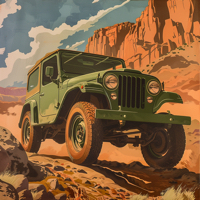 Depends on which Wrangler you’re talking about.
Older Wranglers – from 1987 through 1996 – known as the YJ, replaced the CJ7. This is the first Jeep officially called the “Wrangler” by the parent company. These came in only one body style, offering a short wheelbase, wider stance, and the same leaf spring suspension of the CJ. This was the first attempt to make a more daily drivable Jeep. It drives like a truck with a really short wheelbase; it bounces from front to back and is good for short trips.