
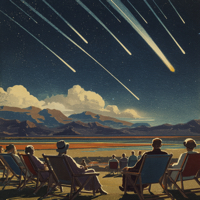
 The sky over California puts on one of its best displays this weekend. From desert flats to high mountain vistas, the Geminid meteor shower peaks between December 13 and 14 — and under the right conditions, it’s the year’s most spectacular meteor show. Get away from town lights and clouds, and you’ll see fast, bright streaks and the occasional fireball that make a late night worth it.
The Geminids run roughly from December 1 to 21, with peak activity from December 13 to 14. Plan to be settled in by about 10 p.m.; the waning crescent moon doesn’t rise until roughly 2 a.m., which gives several moon-free hours when the faint stuff is visible. The stream is debris from asteroid 3200 Phaethon and, under dark skies, rates can hit 60–120 meteors per hour. NASA calls the Geminids one of the most powerful and spectacular annual showers.
If you want to see more meteors, pick a true dark site with an unobstructed horizon and give your eyes time to adjust. Dress in layers — clear winter nights bite — and bring a camp chair or sleeping pad so you can look up without killing your neck. Use a red-light headlamp for moving around; full white lights will ruin your night vision. Don’t lock onto the radiance in Gemini: sweep about 45 degrees away and scan a broad swath of sky. If photographing, mount a wide lens on a tripod, run an intervalometer, and capture long frames to stack later.
Check and recheck the weather. I use Windy (they have an app) for hour-by-hour cloud cover; when it’s socked in, I reroute. Use a light-pollution map or the International Dark-Sky lists to pick sites with low Bortle ratings. Also check road and park status with the managing agencies — the National Park Service for Death Valley, Joshua Tree, Yosemite, and Mojave; and California State Parks for Anza-Borrego, Bodie, and Sinkyone — because gates, winter closures, and seasonal restrictions change quickly. Night driving in parks can be treacherous: slow down, watch for wildlife, and avoid using bright headlights near other observers.
Good California options: Death Valley National Park (Zabriskie Point, Mesquite Flat, Badwater) for some of the darkest skies in the lower 48; Joshua Tree for iconic silhouettes and wide horizons; Anza-Borrego (Borrego Springs, Blair Valley) thanks to its Dark Sky Community status; Mojave National Preserve for quiet expanses; Yosemite and Lassen for true mountain dark-sky experiences; Bodie State Historic Park for ghost-town foregrounds; and remote spots like Massacre Rim Dark Sky Sanctuary or Sinkyone Wilderness for near-pristine horizons. Pick a site that aligns with your comfort level with road conditions and winter weather.
Quick safety checklist: confirm park access on the NPS or California State Parks site, dress warmly, pack water and snacks, use red light only, and keep headlights low when others are watching. If camping, follow campground rules and pack out what you brought in.
Recommended Northern California Viewing Spots
- Lassen Volcanic National Park — remote, high-elevation skies and very low light pollution.
- Yosemite National Park (Glacier Point / Olmsted Point areas) — mountain horizons and big-sky views.
- Bodie State Historic Park — ghost-town foregrounds with deep eastern Sierra darkness.
- Sinkyone Wilderness State Park — coastal darkness with a low horizon for marine views.
Recommended Southern California Viewing Spots
- Death Valley National Park — some of the darkest, widest horizons in the lower 48.
- Joshua Tree National Park — iconic rock silhouettes and clear desert skies.
- Anza-Borrego Desert State Park (Borrego Springs / Blair Valley) — Dark Sky Community with easy access.
- Mojave National Preserve — expansive, quiet desert.
Tips for Best Viewing
- Check the weather avoid viewing areas with cloud cover.
- Look for International Dark Sky Parks (IDSP) or Communities (IDSC).
- Check Bortle Scale ratings (lower numbers are darker).
- Visit during a new moon for the darkest conditions.