Category Archives: Success Stories

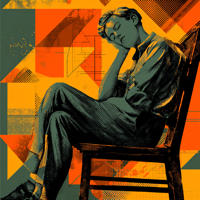
‘Tired Of Waiting’ Teenager Self-Publishes Novels

Mary Isokariari has posted on Young Voices about Lloyd Harry-Davis, 16, who “juggles studies with writing works of fantasy fiction.” She writes:

AN ENTERPRISING teenage author has self-published a series of urban fantasy novels.

Lloyd Harry-Davis, a 16-year-old first year sixth-form student at St Dominic’s Sixth Form College in Harrow, northwest London, wrote his first book Preternatural at the age of 12 and completed the second a year later.

Continue reading

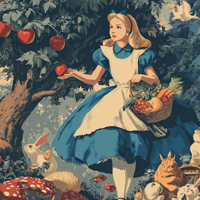
Today in Self-Publishing History: Alice’s Adventures in Wonderland – Lewis Carroll

On November 26, 1865 Charles Lutwidge Dodgson, under the pen name Lewis Carroll published the novel Alice’s Adventures in Wonderland.

From Wikipedia:

[Alice in Wonderland] … tells of a girl named Alice who falls down a rabbit hole into a fantasy world populated by peculiar, anthropomorphic creatures. The tale plays with logic, giving the story lasting popularity with adults as well as with children. It is considered to be one of the best examples of the literary nonsense genre. Its narrative course and structure, characters and imagery have been enormously influential in both popular culture and literature, especially in the fantasy genre.

Since the invention of the printing press – and becoming increasingly popular since the 19th century – many successful authors would create and publish their own works.  These self-published authors would gain more control of their work, earn greater profits, and eschew the practical bondage required by publishers.  Publishers have repeatedly attempted to frame these and other self-published authors as using “vanity publishing” in an attempt to shame them.  To be clear: most people can’t name a single publisher … but they can name MANY self-published authors.  And English classes don’t have assignments to read Random House or Penguin, but they do have assignments on Twain, Tennyson, Kipling, and Thoreau.

Continue reading

NaNoWriMo 2013: And now for something completely different.

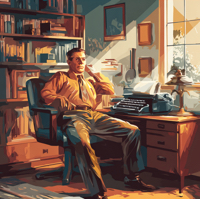
For NaNoWriMo this year, I tried an experiment. Normally I use Dragon NaturallySpeaking coupled with Scrivener and LibreOffice.

This year, I used Notes, Scrivener, Dragon, and Siri on my iPad and iPhone. I dictated virtually the entire work, sometimes when I was sitting in traffic, or out hiking, sometimes at home, or just wherever (“wherever” includes waiting on annoyingly late dates to show up. I’ve decided that waiting for someone who doesn’t have the respect to show up within 15 minutes of the date isn’t worth waiting for.  No matter how big her boobies are).

My work schedule has been: get up early, dictate while I hike (watching out for coyotes – they’re out in force). Get back home, pick up my computer, head over to get coffee, and spend the hour there organizing everything I’d saved in Notes into Scrivener. Then organizing the Scrivener bits into something reasonably coherent.

I’ve been working roughly 4 hours a day on this project just to see if I’m more productive by using ‘gap time’ (the time between locations, assignments, waiting for the microwave to ding, drive-time, waiting for clients or dates, and down time throughout the rest of the workday).  It isn’t dedication, it’s a science experiment.

Continue reading

Celebrating the life of C.S. Lewis (11/29/1898 – 11/22/1963)

“Affection is responsible for nine-tenths of whatever solid and durable happiness there is in our lives.”
– C.S. Lewis

On this day, November 22, 1963, the world lost a great man. An infinite voice. An unequaled imagination.

From Wikipedia:

Clive Staples Lewis (29 November 1898 – 22 November 1963), commonly called C. S. Lewis and known to his friends and family as “Jack”, was a novelist, poet, academic, medievalist, literary critic, essayist, lay theologian, and Christian apologist. Born in Belfast, Ireland, he held academic positions at both Oxford University (Magdalen College), 1925–1954, and Cambridge University (Magdalene College), 1954–1963. He is best known both for his fictional work, especially The Screwtape Letters, The Chronicles of Narnia, and The Space Trilogy, and for his non-fiction Christian apologetics, such as Mere Christianity, Miracles, and The Problem of Pain.

“Even in literature and art, no man who bothers about originality will ever be original: whereas if you simply try to tell the truth (without caring twopence how often it has been told before) you will, nine times out of ten, become original without ever having noticed it.” – C.S. Lewis

Continue reading

Fact: Self-publishing my non-fiction as ebooks makes sense

“Having registered that digital is the busy end of the business, I realised I could do more, and faster, on my own”

Anthony Hayward posted on The Guardian today about his adventures in self-publishing.  From the article:

Last year, ebook sales in the United Kingdom more than doubled, as did their share of the entire books market – to almost 15%. Despite an understandable reluctance on the part of many readers to join this revolution (and in time it might well prove to be that) ebooks are here to stay – so why not embrace them and discover the advantages?

As a journalist and author myself, I have done just that. After writing more than 20 books, with major publishers behind them, I have found it increasingly difficult to get new ideas accepted. It is also frustrating as a writer to have a non-fiction book that is up-to-the-minute when “completed”, only for it to come out maybe nine months later and seem slightly dated.

Continue reading