

 Polly Courtney believes that John Green got it wrong. I agree. He seems to not understand what ‘self-publishing’ actually is. But he does like to talk about how ‘they’ are always holding him up as some kind of example. I’m not sure who ‘they’ are, but someone is floating his ego up to heights where he seems kinda less like a self-publisher and more like a self-centered publisher.
From the article:
What John Green has failed to recognise, however, is that self-publishing is not about trying to take on the jobs of editors, warehouse employees and librarians. Self-publishing is not about trying to do everything yourself.
Self-publishing is about staying in control of your destiny as a writer and having a say in how your book is packaged, produced, distributed and promoted. It is about making your own decisions, in collaboration with the experts (and in some cases, fans) to ensure that your work reaches readers in the way that is right for you.
You can read the whole post HERE.
 Lauren Indvik is reporting on Mashable that Nook has unveiled a new program, Nook Snaps, that offers short subject ebooks of 5,000 words for $1.99. These ebooks are 60-day Nook exclusives, which seems similar to Amazon’s 90-exclusive Select program.
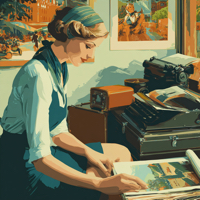 Lulu has launched a photo book printing service, available through picture.com. The service offers everything from bound books to calendars and even brochures.
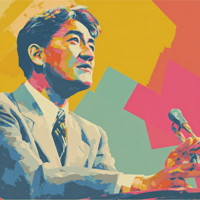 In his keynote speech Saturday at uPublishU, former Apple evangelist Guy Kawasaki talked about his personal journey from traditionally published writer to indie author. He also provided 10 great self-publishing tips to the packed house (although, personally, I believe #10 – “Never give up” – should be #1!). Kawasaki is a prolific author of 12 book, including APE: Author, Publisher, Entrepreneur-How to Publish a Book.
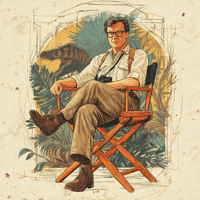 Michael Crichton, who passed away in 2008 at the age of 66, wrote a number of books under pen names while studying at Harvard Medical School back in the sixties. While a student, he wrote eight books as “John Lange,” one as “Jeffery Hudson,” and he co-wrote another with his brother Michael as “Michael Douglas.” The guy had the enviable ability to write 10,000 words a day, and because of that, he needed multiple pen names.