
Category Archives: Dead Tree Books

Vivalogue Announces New Self-Publishing Forum for Independent Authors

New Westminster, B.C. (PRWEB) November 29, 2013 – Vivalogue, an author services company based in New Westminster, BC, has strengthened its commitment to independent authors by launching a new networking cooperative for self-published authors and writers considering self-publishing.

The network “Raindance for Independent Authors” grew out of the Raindance Book Festival for Independent Authors held November 9, 2013 in Richmond, B.C. Believed to be the first of its kind in Canada, the festival included a book fair, workshops, editors’ ‘blue pencil’ sessions and a book drive supporting Frontier College. The festival was organized using a collaborative model which encouraged authors to contribute their collective time and talents. Authors identified this collaborative aspect of the festival as a key benefit of participation and expressed interest in continuing these relationships.
Continue reading

Writing: Should The Self-published Author Use A Pen-Name (Pseudonym)?

Alli the Self-Publishing Advice Blog has posted an editorial on their site:

Trade publishers are notoriously wary of using the same author name across different genres, or of using a name that they feel is inappropriate for a particular book  – hence the morphing of Joanne Rowling into the more masculine J K Rowling, even though she doesn’t have a middle name. While self-published writers have the freedom to choose their own pen-name, the decision isn’t always easy or obvious. A group of self-published authors discussed the options on ALLi’s lively private Facebook forum earlier this week. Here are some of their conclusions:

Continue reading

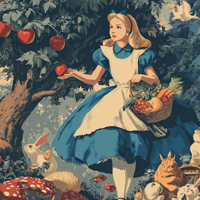
Today in Self-Publishing History: Alice’s Adventures in Wonderland – Lewis Carroll

On November 26, 1865 Charles Lutwidge Dodgson, under the pen name Lewis Carroll published the novel Alice’s Adventures in Wonderland.
From Wikipedia:

[Alice in Wonderland] … tells of a girl named Alice who falls down a rabbit hole into a fantasy world populated by peculiar, anthropomorphic creatures. The tale plays with logic, giving the story lasting popularity with adults as well as with children. It is considered to be one of the best examples of the literary nonsense genre. Its narrative course and structure, characters and imagery have been enormously influential in both popular culture and literature, especially in the fantasy genre.

Since the invention of the printing press – and becoming increasingly popular since the 19th century – many successful authors would create and publish their own works.  These self-published authors would gain more control of their work, earn greater profits, and eschew the practical bondage required by publishers.  Publishers have repeatedly attempted to frame these and other self-published authors as using “vanity publishing” in an attempt to shame them.  To be clear: most people can’t name a single publisher … but they can name MANY self-published authors.  And English classes don’t have assignments to read Random House or Penguin, but they do have assignments on Twain, Tennyson, Kipling, and Thoreau.

Continue reading

Free – Expanded Distribution Options for CreateSpace Members!

From Createspace:

We’re excited to announce Expanded Distribution is now Free. You can make your books available through more channels including: online retailers, bookstores, libraries, and academic institutions within the U.S. at no cost. Enable these distribution channels today so you can reach a wider audience and increase the discoverability of your books. 

Createspace normally lists your book on the Createspace website as well as Amazon.

Continue reading

Success Stories – To Self-Publish or Not To Self-Publish…

USA Today Bestselling author, Kelli Maine writes about the pros and cons of self publishing:

Sometimes you have to take the plunge, but which direction do you go? Not too long ago, this question wasn’t considered valid by “the industry”. If you self-published, it was because you couldn’t get an agent or you couldn’t get an editor to buy your book. But today, the game has turned on its head. You don’t need an agent or an editor to get books in reader’s hands and be considered a legitimate author.

While some very successful self-published authors still seek the validity of having their names on a book in Barnes and Noble, know that getting stocked in a bookstore is NOT a guarantee from even the big six publishers. Take it from someone who has a YA published by a big six publisher and zero books in bookstores. They can’t necessarily sell your book to book buyers any better than you could.

With fewer and fewer brick and mortar stores and the ones that are still around carrying an equal number of t-shirts, toys and One Direction dolls as books, there’s an ever shrinking amount of shelf space and if you can suck in your gut and hold your breath, you might be able to squeeze in between Cassie Clare and Veronica Roth.

You can read the whole article HERE.