Category Archives: Writing

Manifrotto recommends a great book for landscape photographers

Jose Antunes has posted reviews of a number of great photography books, including one of the great ones about landscape photography.  From the post:

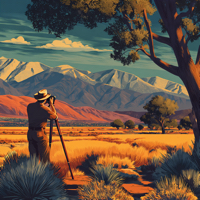
There are tens of eBooks about landscape photography, making it hard to choose one. Still, if I could only buy one, this would be it: “Visual Flow – Mastering the Art of Composition”, by Ian Plant, with photographs by this author and George Stocking. If there’s one easy way to enter 2014  widening your horizons in terms of Photography, it surely is through the reading of Visual Flow – Mastering the Art of Composition.

Continue reading

Penguin teams up with Readmill on booksharing app

The Guardian UK is reporting that Penguin UK has teamed up with the Berlin-based ebook app developer Readmill to bolster direct ebook sales.  From the article:

The app allows readers to share ebook highlights and to talk to each other while they’re reading, “liking” one anothers’ updates and discussing the books.

The deal includes more than 5,000 digital titles – Penguin UK owns digital rights to works by authors such as Zadie Smith, Hari Kunzru, and John Updike, as well as Morrissey’s Autobiography. People who buy ebooks from Penguin.co.uk will have the option to “send to Readmill”. The arrangement sidesteps Amazon’s Kindle and means that Penguin can retain more data on customers.

The free app, designed for iPhone, iPad or Android phones, lets readers share highlights, and supports digital conversations about books by linking reading to social media. Readers can use the app to update Facebook and Twitter when they begin reading a book, if they want to highlight passages or when they finish a book.

Continue reading

Writing: Should The Self-published Author Use A Pen-Name (Pseudonym)?

Alli the Self-Publishing Advice Blog has posted an editorial on their site:

Trade publishers are notoriously wary of using the same author name across different genres, or of using a name that they feel is inappropriate for a particular book  – hence the morphing of Joanne Rowling into the more masculine J K Rowling, even though she doesn’t have a middle name. While self-published writers have the freedom to choose their own pen-name, the decision isn’t always easy or obvious. A group of self-published authors discussed the options on ALLi’s lively private Facebook forum earlier this week. Here are some of their conclusions:

Continue reading

Today in Self-Publishing History: Alice’s Adventures in Wonderland – Lewis Carroll

On November 26, 1865 Charles Lutwidge Dodgson, under the pen name Lewis Carroll published the novel Alice’s Adventures in Wonderland.

From Wikipedia:

[Alice in Wonderland] … tells of a girl named Alice who falls down a rabbit hole into a fantasy world populated by peculiar, anthropomorphic creatures. The tale plays with logic, giving the story lasting popularity with adults as well as with children. It is considered to be one of the best examples of the literary nonsense genre. Its narrative course and structure, characters and imagery have been enormously influential in both popular culture and literature, especially in the fantasy genre.

Since the invention of the printing press – and becoming increasingly popular since the 19th century – many successful authors would create and publish their own works.  These self-published authors would gain more control of their work, earn greater profits, and eschew the practical bondage required by publishers.  Publishers have repeatedly attempted to frame these and other self-published authors as using “vanity publishing” in an attempt to shame them.  To be clear: most people can’t name a single publisher … but they can name MANY self-published authors.  And English classes don’t have assignments to read Random House or Penguin, but they do have assignments on Twain, Tennyson, Kipling, and Thoreau.

Continue reading

NaNoWriMo 2013: And now for something completely different.

For NaNoWriMo this year, I tried an experiment. Normally I use Dragon NaturallySpeaking coupled with Scrivener and LibreOffice.

This year, I used Notes, Scrivener, Dragon, and Siri on my iPad and iPhone. I dictated virtually the entire work, sometimes when I was sitting in traffic, or out hiking, sometimes at home, or just wherever (“wherever” includes waiting on annoyingly late dates to show up. I’ve decided that waiting for someone who doesn’t have the respect to show up within 15 minutes of the date isn’t worth waiting for.  No matter how big her boobies are).

My work schedule has been: get up early, dictate while I hike (watching out for coyotes – they’re out in force). Get back home, pick up my computer, head over to get coffee, and spend the hour there organizing everything I’d saved in Notes into Scrivener. Then organizing the Scrivener bits into something reasonably coherent.

I’ve been working roughly 4 hours a day on this project just to see if I’m more productive by using ‘gap time’ (the time between locations, assignments, waiting for the microwave to ding, drive-time, waiting for clients or dates, and down time throughout the rest of the workday).  It isn’t dedication, it’s a science experiment.

Continue reading